View an individual patient
Opening a patient lets you move from a cohort-level summary to the source notes behind each finding. There are two ways to view a patient, and they differ in what they show.
Two ways to open a patient
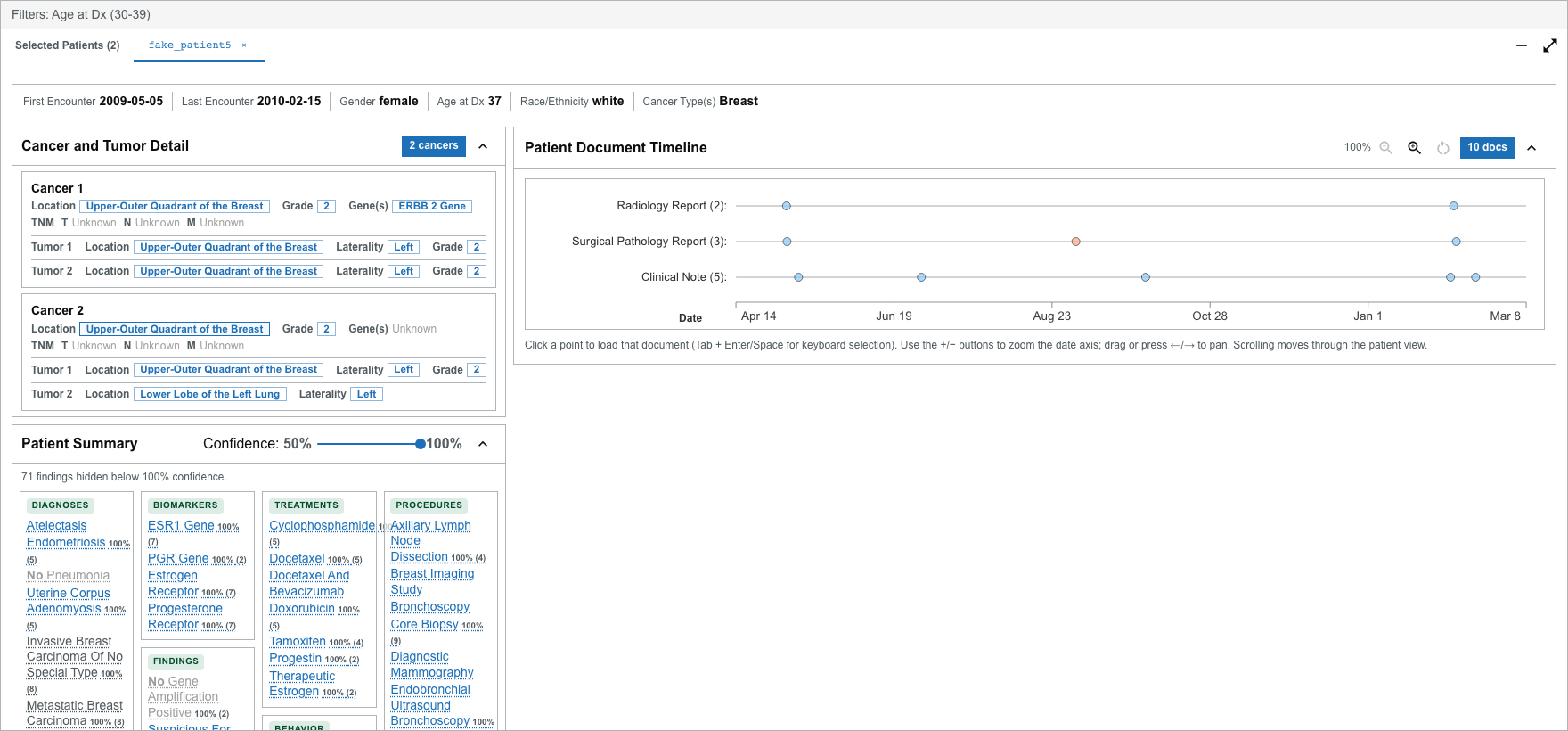
Embedded patient view (inside the Selected Patients drawer). This is the richer view. Open it from the Cohort Explorer by:
- clicking a patient dot on a filter card, or
- expanding a row in the Selected Patients table and selecting Show in Document Viewer (or right-clicking the row and choosing Open in new tab).
The patient opens as a tab in the drawer.
Standalone Patient View (from Home). A separate page where you look a patient up by ID. It shows demographics, cancer and tumor detail, the document timeline, the Event Timeline, and the Document Viewer, but not the structured Patient Summary. See Standalone Patient View.
What the embedded view contains
Depending on the available data, the embedded view can include:
- Patient overview — demographics such as first and last encounter, gender, age at diagnosis, and race.
- Cancer and Tumor Detail — structured cancer- and tumor-level facts you can select.
- Patient Document Timeline — the patient's notes plotted over time.
- Event Timeline — extracted concepts plotted against the dates they relate to.
- Patient Summary — diagnoses, staging, biomarkers, treatments, and more, grouped into a structured card.
- Document Viewer — the text of the selected note, with concept highlights and filters.
Sections are omitted when their supporting data is unavailable. If a patient has no structured summary, the Patient Summary card does not appear; the same is true of the other sections.
Follow a finding to its source
The most powerful thing this view does is let you trace a finding to the note it came from:
- Select a fact in Cancer and Tumor Detail, or a linked item in the Patient Summary, to open its source note in the Document Viewer.
- Related notes are marked on the timeline so you can see where a finding is documented.
Always confirm extracted findings against the source note before relying on them clinically.